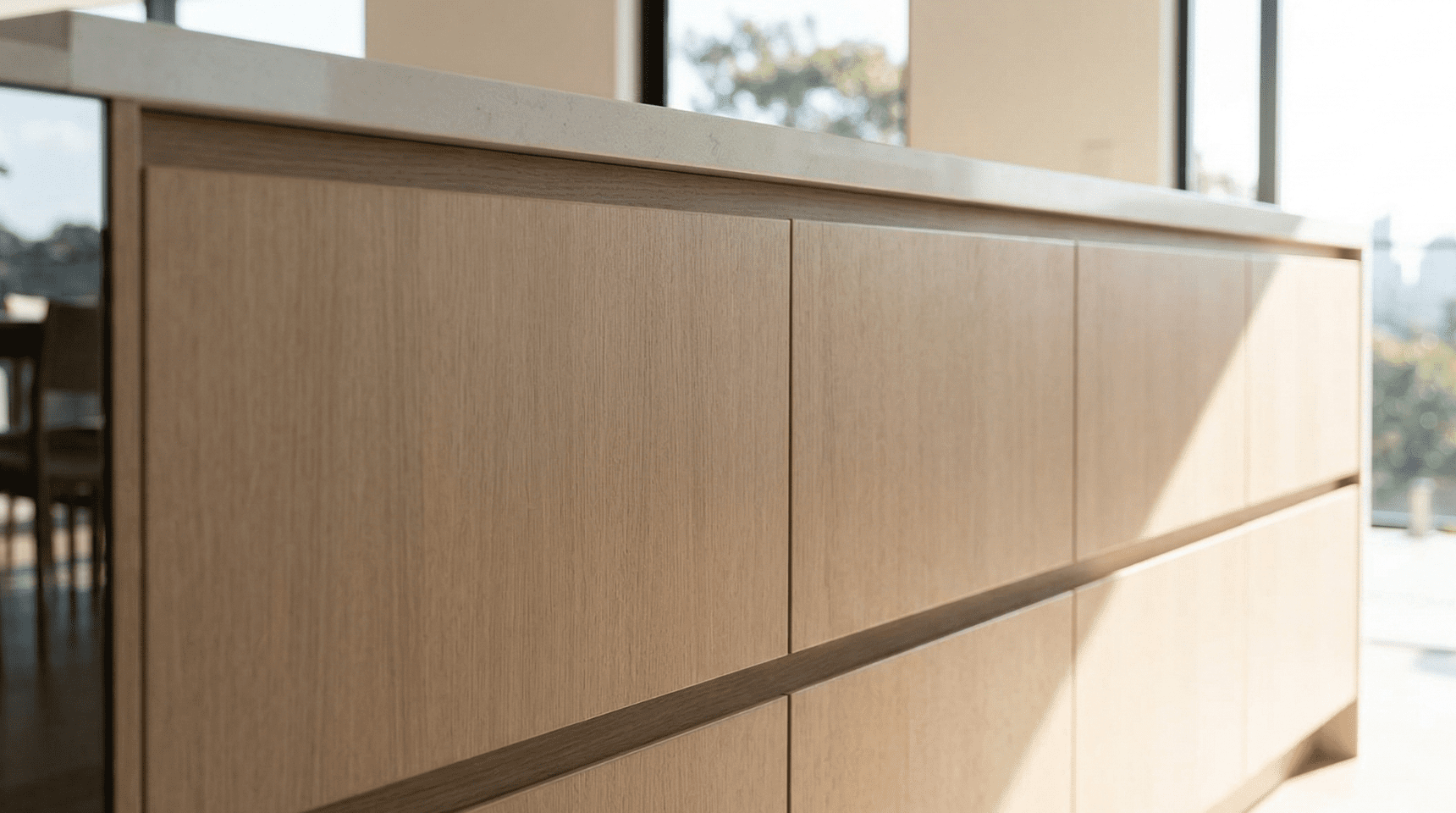
Walk into any kitchen showroom in Sydney right now and you will notice something missing. Handles. More and more display kitchens have clean, unbroken cabinet fronts with no visible hardware at all. Push-to-open mechanisms, recessed finger pulls, or integrated rail handles have replaced the traditional knob or bar handle.
Handleless kitchens are not new. They have been popular in European kitchen design for over a decade. But in Australia, and particularly in Sydney, they have moved from niche to mainstream in the past few years. The question for homeowners planning a renovation is whether this is a lasting design shift or a trend that will date your kitchen in five years.
The answer, like most things in kitchen design, is not straightforward. It depends on your style, your household, and how honest you are about the trade-offs.
What a Handleless Kitchen Actually Looks Like
There are three main approaches to handleless design. Each gives you a different look and a different experience.
Push-to-Open (Tip-On)
Doors and drawers have no visible hardware at all. You press the front panel and a spring mechanism pops it open. The cabinet surface is completely flat and uninterrupted. This is the purest form of handleless design and the one that looks most striking in photos.
Recessed Finger Pull (J-Pull or C-Channel)
A groove is routed into the top or bottom edge of the door, giving you a place to grip without any protruding hardware. From the front, the cabinet looks handle-free, but the pull is visible from above or below. This is the most popular handleless option because it gives you the clean look with a more intuitive way to open doors.
Integrated Rail Handle (Sharknose)
A slim aluminium rail is built into the edge of the door, creating a thin line that doubles as a handle. It is visible but minimal. This sits between fully handleless and traditional, giving a modern look while keeping the opening action familiar.
You can see examples of these approaches in our guide to kitchen handles, which covers both handleless and traditional options.
Why Handleless Has Become So Popular
The rise of handleless kitchens in Sydney is driven by a few things happening at once.
Open-Plan Living
Most homes built in the Macarthur region over the past fifteen years have open-plan kitchen, dining, and living areas. The kitchen is visible from the couch, the dining table, and often the front door. In this context, a kitchen with clean lines and minimal visual clutter blends more smoothly with the living space.
Handleless cabinetry removes one layer of visual noise. There are no rows of handles creating shadows and breaking up the surface. The kitchen reads as a piece of furniture rather than a utility room.
Social Media and Design Trends
Instagram and Pinterest have amplified the handleless aesthetic. Clean, minimal kitchens photograph well. They look calm and spacious in images, which makes them heavily shared and saved. This exposure has shifted what homeowners expect a “modern” kitchen to look like.
European Influence
Australian kitchen design has leaned increasingly toward European manufacturers and design philosophies. German and Italian kitchens have used handleless systems for years, and as Australian cabinetmakers have adopted similar hardware and construction methods, handleless has become more accessible at mid-range price points.
The Trade-Offs Nobody Talks About
Handleless kitchens look beautiful, but they come with practical considerations that are worth understanding before you commit.
Fingerprints and Cleaning
Without handles, you are touching the cabinet door surface every time you open it. On gloss or satin finishes, fingerprints show up immediately. Dark colours are worse than light. If you have young children who open and close cabinets dozens of times a day, you will notice the marks.
This does not mean handleless is a bad choice. It means your finish selection matters more. Matte finishes in lighter colours hide fingerprints better. Polyurethane cabinetry in a matte finish is one of the best combinations for handleless because it is easy to wipe clean and does not show marks the way gloss does.
Push-to-Open Reliability
Push-to-open mechanisms are mechanical. They can wear out, misalign, or stop catching properly over time. Quality hardware (brands like Blum or Hettich) lasts significantly longer than budget alternatives, but even the best mechanisms need occasional adjustment.
Finger pulls and rail handles do not have this issue because there is no mechanism to fail. If long-term reliability matters more to you than the perfectly flat look, a finger pull or sharknose handle is the safer bet.
Resale Considerations
Handleless kitchens appeal to a specific buyer. They read as “designer” and “modern,” which is attractive to many people. But some buyers prefer the familiarity of visible handles. If you are renovating with resale in mind, handleless is a strong choice in newer suburbs and modern homes, but may be less universally appealing in older or more traditional areas.
Accessibility
For older adults or anyone with reduced grip strength, push-to-open cabinets can be frustrating. The press-and-catch action requires a specific amount of force and coordination that not everyone finds comfortable. A recessed finger pull or rail handle is more accessible while still giving you the handleless look.
Handleless and Traditional: They Can Coexist
One approach that is growing in popularity is mixing handleless and traditional hardware in the same kitchen. For example, handleless base cabinets and drawers with a simple bar handle on upper cabinets. Or a handleless island with handled perimeter cabinetry.
This gives you the clean look where it matters most (the surfaces you see at eye level and below) while keeping familiar hardware where it is most practical (overhead cabinets that need a firm grip to pull open).
There are no rules that say a kitchen has to be entirely one thing. The best kitchens are designed around how you use the space, not around maintaining a single aesthetic across every surface.
Is Handleless a Trend or a Permanent Shift?
Both, really. The technology and hardware behind handleless kitchens are not going away. Push-to-open, finger pulls, and integrated rails are now standard offerings from every major hardware manufacturer. They are not novelty items.
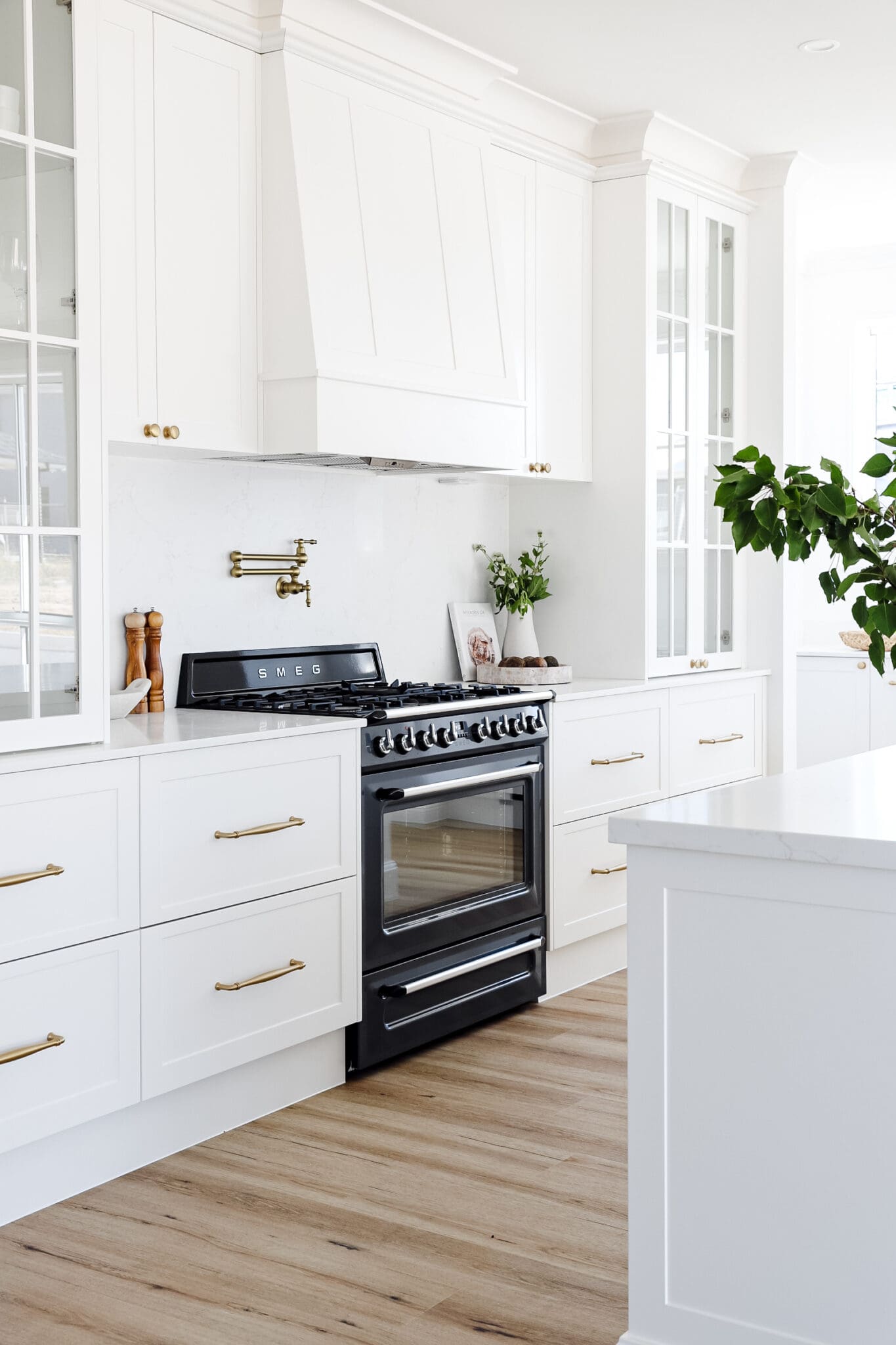
But the fully flat, push-to-open look that dominates Instagram may soften over time. Design tends to swing in cycles, and the move toward warmer, more textured kitchens in 2026 suggests that some visible hardware (particularly in brass, brushed gold, or matte black) is making a comeback alongside handleless options.
The safest approach is to choose handleless for the reasons that matter to you (clean lines, easy cleaning, modern feel) rather than because it is popular right now. If those reasons hold up in ten years, so will your kitchen.
How to See It for Yourself
The difference between handleless options is hard to appreciate in photos. The depth of a finger pull, the click of a push-to-open drawer, the weight of a sharknose rail in your hand: these are things you need to feel.
Our Narellan showroom has handleless and traditional cabinetry side by side so you can compare. If you are weighing up handleless kitchens against traditional handle styles, or want to explore a mixed approach, book a free consultation and we will walk you through the options.