The benchtop is the surface you touch most in your kitchen. You chop on it, lean on it, drop hot pans near it, spill wine on it, and wipe it down multiple times a day. It is also one of the first things people notice when they walk into the room.
So when it comes time to choose a stone benchtop for your renovation, the decision deserves more than a quick glance at a colour swatch. The material you pick affects how the benchtop performs over ten or fifteen years, how much maintenance it needs, and how much you pay upfront.
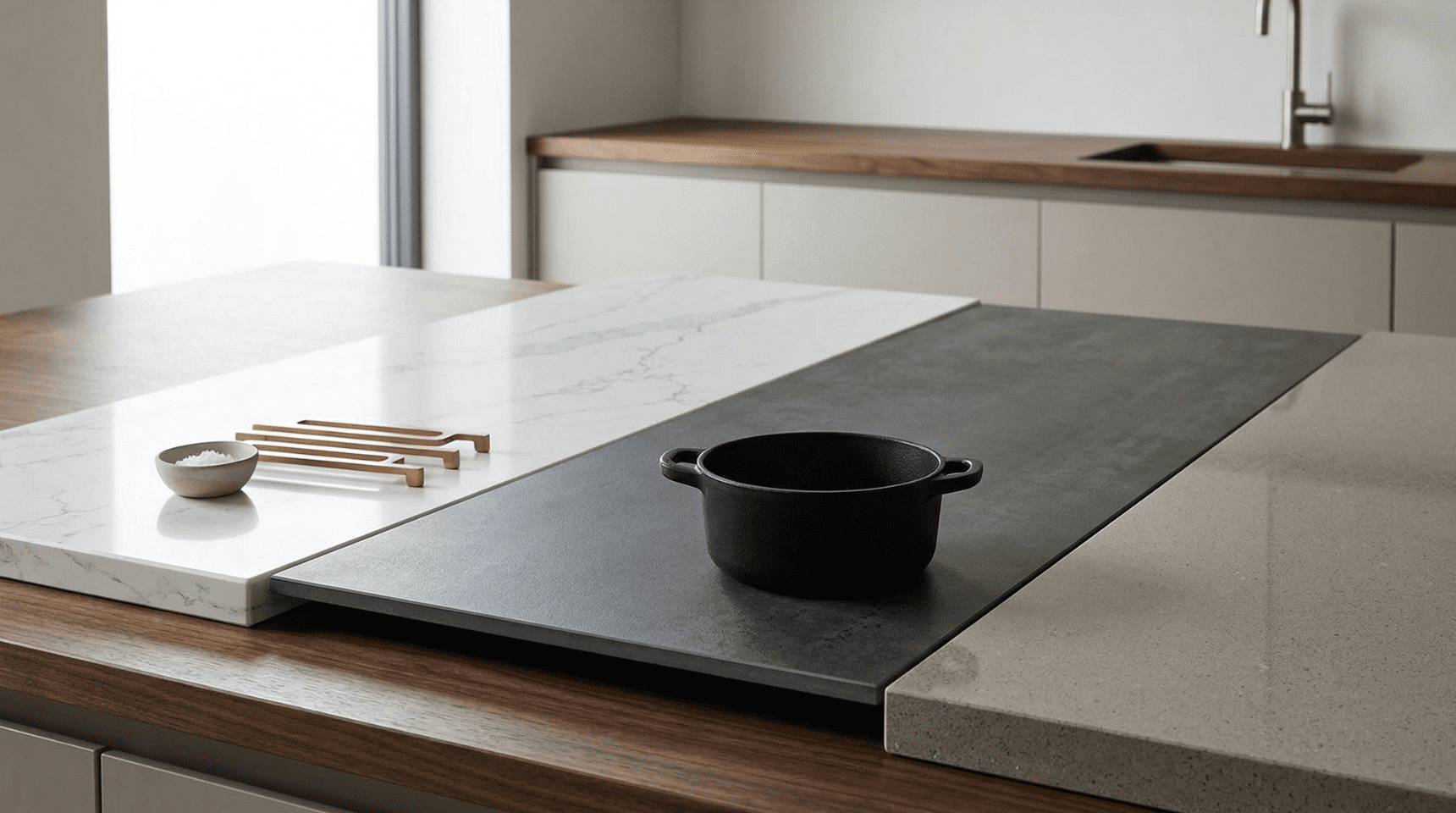
The three names you will hear most often are Caesarstone, Dekton, and engineered quartz (as a broader category). They are related but not the same, and the differences matter more than most showrooms let on.
What Engineered Quartz Actually Is
Engineered quartz is a manufactured stone made from roughly 90 to 95 percent ground natural quartz, combined with resins, polymers, and pigments. The mixture is compressed and cured into slabs. The result is a non-porous, consistent surface that comes in a wide range of colours and patterns, including convincing marble and concrete looks.
Caesarstone is a brand of engineered quartz. It is not a separate material. When someone says “I want Caesarstone,” they are asking for a specific manufacturer’s version of engineered quartz, the same way someone might ask for a Band-Aid when they mean an adhesive bandage.
Other engineered quartz brands available in Australia include Silestone, Smartstone, Essastone, and Quantum Quartz. They all use similar manufacturing processes, though each brand has its own colour range, surface finishes, and warranty terms.
The key point: Caesarstone is engineered quartz. All Caesarstone is engineered quartz, but not all engineered quartz is Caesarstone.
Where Dekton Fits In
Dekton is made by Cosentino, the same company behind Silestone. But Dekton is not engineered quartz. It is an ultra-compact sintered surface made from a blend of raw materials used in glass, porcelain, and quartz production. These materials are subjected to extreme heat and pressure (over 25,000 tonnes of force) in a process that mimics the way natural stone forms over thousands of years, compressed into minutes.
The result is a surface that behaves differently from engineered quartz in several important ways.
Dekton is thinner (available in slabs as slim as 8mm compared to the standard 20mm for quartz). It is harder. It is more resistant to UV light, heat, and scratching. And it is completely non-porous without the need for sealing.
Dekton sits at a higher price point than most engineered quartz, and the fabrication process is more specialised. Not every stone fabricator works with Dekton, which can affect availability and lead times.
Heat Resistance: The Big Difference
This is where the gap between engineered quartz and Dekton is most significant.
Engineered quartz (including Caesarstone) is heat-resistant, not heatproof. The resin binders in the material can discolour or crack under sustained high heat. Placing a hot pot or pan directly from the stovetop onto an engineered quartz benchtop can leave a mark. Most manufacturers recommend using trivets or heat pads as standard practice.
Dekton is virtually heatproof. You can place a hot pan directly on the surface without damage. This is because the sintering process eliminates the resin component that makes quartz vulnerable to heat. For serious home cooks or anyone who does not want to think about trivets, this is a meaningful advantage.
Natural stone (marble, granite) varies. Granite handles heat well. Marble is more sensitive and can etch from acidic foods regardless of temperature.
Scratch and Stain Resistance
Engineered quartz is hard and resists scratches well in normal kitchen use. You should not cut directly on it (the knife will dull before the stone marks, but micro-scratches can build up over time on polished finishes). It is non-porous, so it resists staining from coffee, wine, and food. This is one of the main reasons engineered quartz became the default benchtop material in Australian kitchens.
Dekton is harder again. It scores higher on the Mohs hardness scale than engineered quartz, making it more resistant to scratching. It is also completely stain-proof because the sintering process leaves zero porosity. Liquids sit on the surface without absorbing, even if left for extended periods.
Both materials outperform natural marble for stain resistance. Marble is porous and will etch from lemon juice, vinegar, and tomato sauce unless sealed regularly. Marble is beautiful, but it requires a level of care that does not suit every household.
Appearance and Colour Range
Engineered quartz offers the widest colour range of any benchtop material. Because pigments are added during manufacturing, the options are almost unlimited. You can get solid colours, subtle veining that mimics Calacatta marble, concrete-look finishes, and everything in between. Caesarstone’s range alone includes over 40 colours across matte, polished, and textured finishes.
Dekton’s colour range is smaller but growing. It excels at replicating natural stone, concrete, and industrial looks. The colours tend to be more muted and textured, which suits contemporary and modern kitchen designs well.
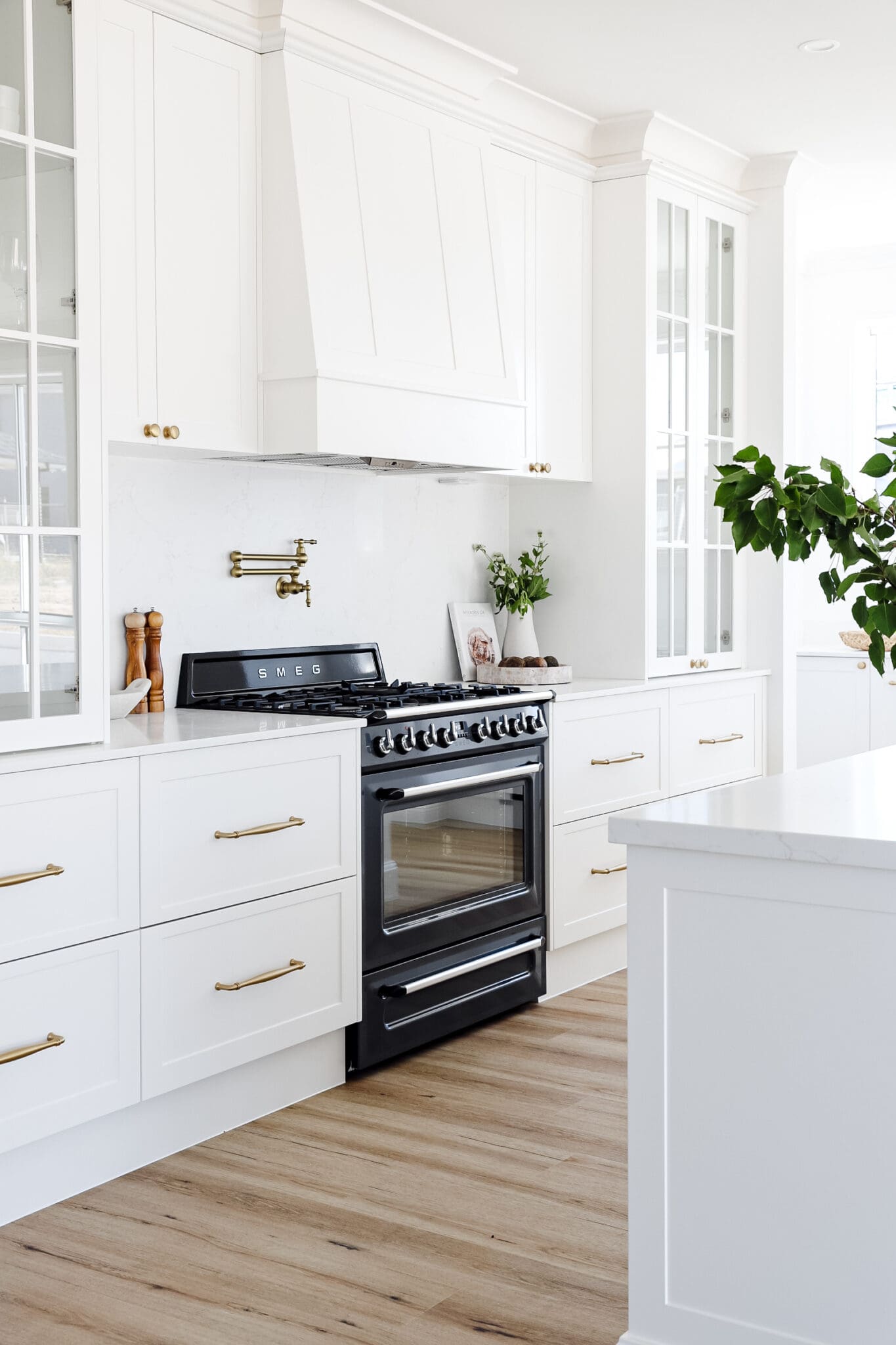
If you want a bright white benchtop with dramatic veining (the marble look without marble maintenance), engineered quartz gives you more options. If you want a darker, more textured surface with industrial character, Dekton has some of the best options available.
Your benchtop choice should work with your cabinetry finish. We have a full rundown of benchtop options and how they pair with different kitchen styles on our site.
Thickness and Edge Profiles
Standard engineered quartz slabs are 20mm thick. You can get a mitred edge to make it look like 40mm, which adds visual weight to an island bench. Waterfall edges (where the stone wraps down the side of the island to the floor) are popular in both materials but add significant cost due to extra material and fabrication.
Dekton’s availability in thinner profiles (8mm, 12mm, 20mm) gives you more flexibility. A slim 12mm Dekton benchtop creates a sharp, modern line that pairs well with handleless cabinetry. A 20mm slab with a waterfall edge makes a heavier design statement.
Cost Comparison
Engineered quartz (mid-range brands) is the most affordable stone benchtop option. Caesarstone and Silestone sit slightly above mid-range brands due to brand positioning and colour range. Dekton is the most expensive per square metre, with the premium reflecting its performance characteristics and fabrication requirements.
For a typical kitchen benchtop run (including an island), the difference between a mid-range engineered quartz and Dekton can be meaningful. Whether that premium is worth it depends on how you use your kitchen.
If you cook heavily, value heat resistance, and want a surface that is genuinely low-maintenance for fifteen-plus years, Dekton’s cost is justified. If you are budget-conscious and careful with hot items, a quality engineered quartz from Caesarstone or Silestone will serve you well for the same period with minor care.
Natural Stone: Still an Option
Granite and marble have not disappeared. Granite remains a durable, heat-resistant option with natural character that engineered products cannot fully replicate. Marble offers a beauty that no manufactured surface matches, but it requires sealing, careful use, and acceptance that it will patina over time.
For most family kitchens in the Macarthur region, engineered quartz or Dekton is the practical choice. But if you are designing a premium kitchen in the Southern Highlands or a home where the kitchen is as much a design statement as a cooking space, natural stone deserves consideration.
How to Choose
Pick based on performance first, appearance second.
If heat resistance is a priority, Dekton leads. If colour range and budget matter most, engineered quartz gives you the widest options. If you want the prestige and character of natural stone and are willing to maintain it, marble or granite can be the right call.
The best way to compare is to see the materials in person, under the lighting conditions of a real kitchen, not a sample board. Visit our Narellan showroom to compare stone options side by side, or book a free consultation and we will bring samples to your home so you can see them against your cabinetry and flooring.