Choosing cabinet doors is one of the biggest decisions in a kitchen renovation, and it is also one of the most confusing. You will hear terms like polyurethane, laminate, thermolaminated, vinyl wrap, and 2-pack thrown around as if everyone knows what they mean. Most people do not, and that is completely fine.
The truth is, the door finish you choose affects how your kitchen looks on day one, how it holds up on year ten, and how much you spend to get there. This is not a small decision. It is the one that determines whether your kitchen still feels new in a decade or starts showing its age in three years.
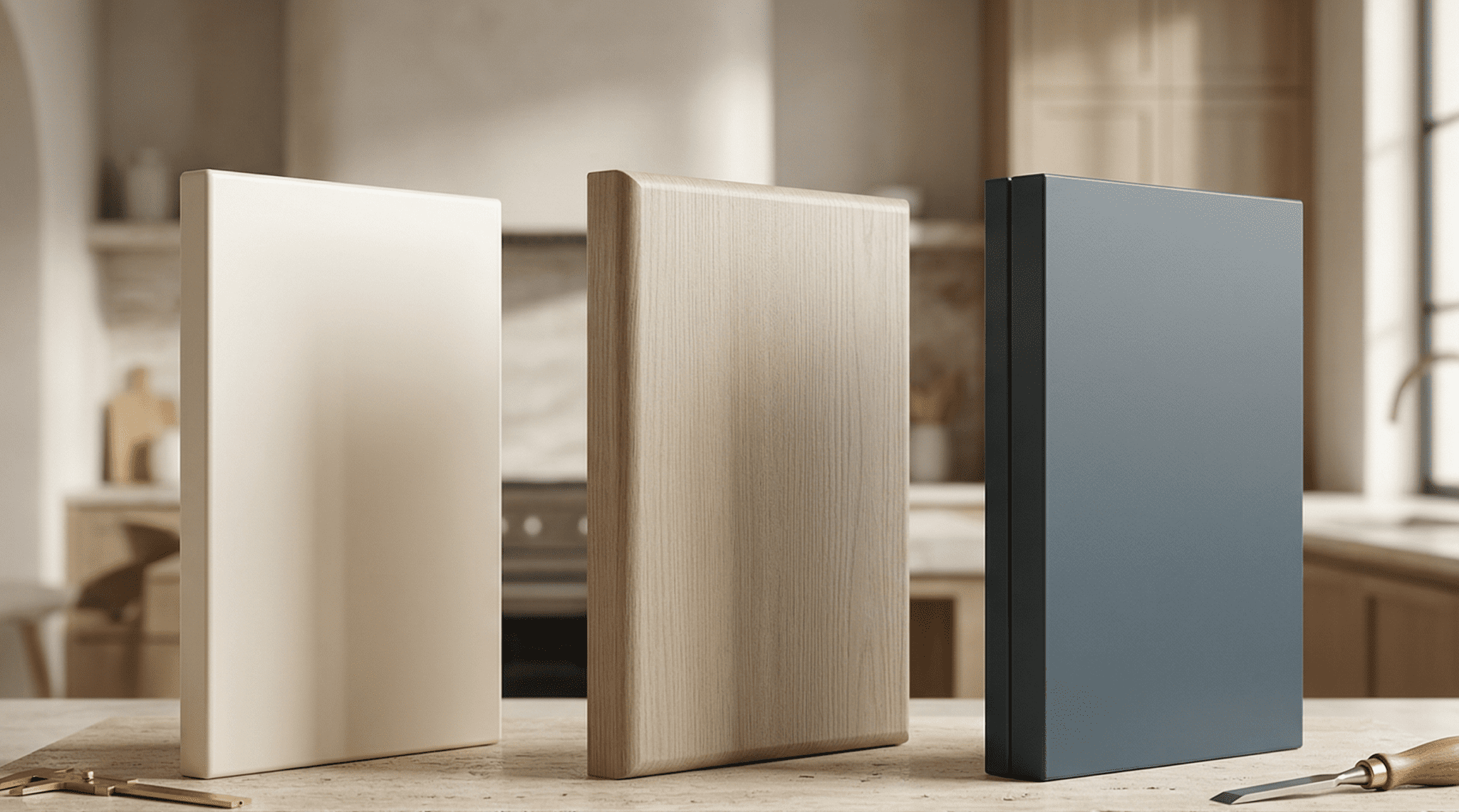
Here is a straight comparison of the three most common cabinet door finishes used in Australian kitchens.
What Each Door Type Actually Is
Before comparing them, it helps to understand what you are actually looking at.
Polyurethane (2-Pack)
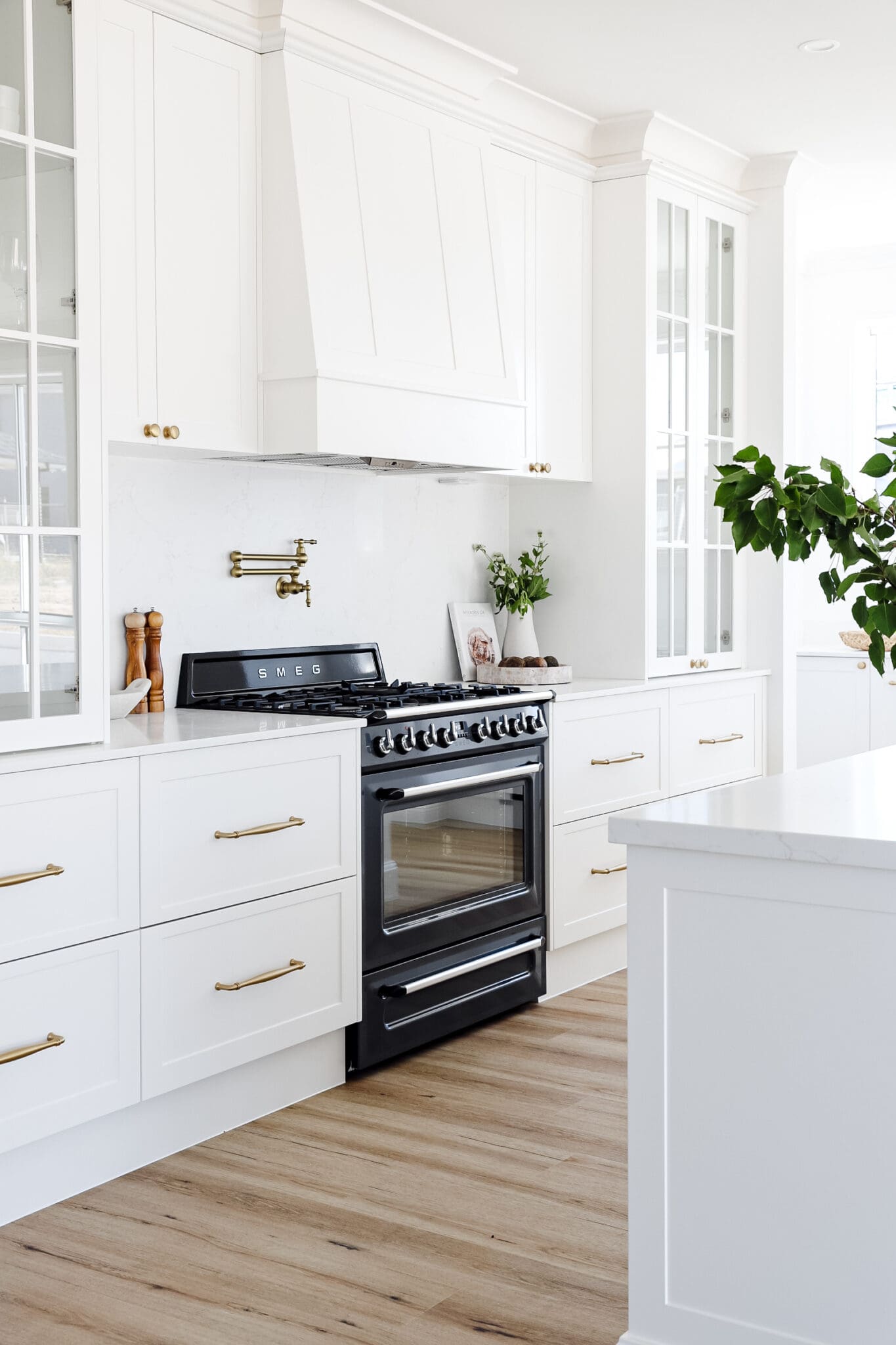
Polyurethane doors are made from MDF (medium-density fibreboard) that is spray-painted with multiple coats of polyurethane paint, then cured to a hard, smooth finish. The result is a seamless surface with no visible joins, edges, or wrapping. You can get them in matte, satin, or gloss finishes and in virtually any colour.
This is the finish you see in high-end custom kitchens. It is what most people picture when they imagine a “designer kitchen.”
Thermolaminated (Vinyl Wrap)
Thermolaminated doors start with an MDF core, but instead of being painted, they are wrapped in a thin vinyl film using heat and vacuum pressure. The film is pressed around the door profile, covering the front and edges in one piece.
Thermolaminated doors come in a wide range of colours and can replicate woodgrain, stone, and other textures. They are a popular choice for budget-conscious renovations. We have a full guide to thermolaminated doors that goes deeper on how they are made.
Laminate
Laminate doors use a high-pressure laminate (HPL) sheet bonded to a substrate, usually particleboard or MDF. The edges are finished separately with matching edging tape. Laminate is hard-wearing and scratch-resistant, sitting between thermolaminated and polyurethane in both price and finish quality.
Laminate is common in flat-panel (slab) door designs. It does not work as well for routed or profiled door styles because the laminate sheet does not bend around curves the way vinyl does.
Durability: How They Hold Up Over Time
This is where the differences matter most, especially if you plan to stay in your home for the next ten to twenty years.
Heat and Moisture Resistance
Kitchens are tough environments. Steam from the kettle, heat from the oven, moisture from the sink. Every surface in your kitchen deals with these conditions daily.
Polyurethane handles heat and moisture well because the paint finish creates a sealed surface. It does not peel, bubble, or lift at the edges in normal kitchen conditions.
Thermolaminated doors are more vulnerable. The vinyl film can lift or peel at the edges over time, particularly near heat sources like ovens, dishwashers, and kettles. Once the film starts lifting, there is no practical way to repair it. The door needs replacing.
Laminate sits in the middle. High-pressure laminate is resistant to heat and moisture on the face, but the edge banding can separate over time if it is not applied well. Quality of manufacturing matters a lot with laminate.
Scratch and Impact Resistance
Laminate is the hardest surface of the three. It resists scratches better than polyurethane, which can chip or mark if hit with something hard. Thermolaminated doors scratch fairly easily, and once scratched, the vinyl cannot be buffed or repaired.
Polyurethane doors can be touched up or resprayed if they get damaged. This is a significant advantage over the other two. A chip in a polyurethane door is fixable. A chip in a thermolaminated door is permanent.
Longevity
In our experience building custom kitchen cabinets across Sydney’s south-west, polyurethane doors consistently last the longest. A well-made polyurethane kitchen will look as good in fifteen years as it did on install day, assuming normal care. Thermolaminated doors typically start showing wear between five and eight years, sometimes sooner near heat sources. Laminate falls somewhere in between, with quality examples lasting ten years or more.
Appearance: The Look and Feel
This is personal, but there are objective differences.
Polyurethane gives you the smoothest, most refined finish. There are no visible edges, no seams, and no texture unless you choose one. It looks and feels like a painted surface because that is exactly what it is. In matte or satin finishes, it has a soft, velvety quality that photographs beautifully and feels premium to touch.
Thermolaminated doors can look good, especially in simple flat-panel designs. But on profiled doors (shaker style, for example), the vinyl wrap can appear slightly rounded or soft at the edges compared to a painted finish. Up close, you can sometimes see where the film stretches around corners.
Laminate offers a clean, flat look and works well in modern, minimalist designs. The edge banding is visible on close inspection, which some people do not mind and others find distracting.
Cost: What You Pay and What You Get
Thermolaminated is the most affordable option. Laminate sits in the middle. Polyurethane is the most expensive.
But cost per door only tells part of the story. When you factor in longevity, repairability, and how the doors age, the cost equation shifts. Replacing thermolaminated doors after seven years is more expensive than paying more upfront for polyurethane doors that last fifteen.
This is not to say thermolaminated doors are a bad choice. For rental properties, short-term homes, or tight budgets, they serve a real purpose. But for a family home where you plan to stay, polyurethane kitchens offer better long-term value.
Which One Should You Choose?
The right answer depends on your situation.
If you are renovating a family home and want something that will look great for a decade or more, polyurethane is the strongest option. It gives you the widest range of colours, the best finish quality, and the ability to repair minor damage.
If you are working within a tighter budget and prioritise scratch resistance over finish quality, laminate in a flat-panel design is a solid middle ground.
If budget is the primary concern and you are comfortable replacing the doors in five to eight years, thermolaminated doors will get you a functional kitchen at a lower entry point.
See the Difference in Person
The best way to understand the difference between these finishes is to see and touch them side by side. Photos can only show you so much. Running your hand across a polyurethane door next to a thermolaminated one tells you more in five seconds than any article can.
If you are comparing door finishes for an upcoming renovation, visit our Narellan showroom to see all three options in person. Or book a free consultation and we will bring the samples to you.