This is the question that stops more kitchen renovations from starting than cost does. Not “how much will it cost” but “how long will we be without a kitchen?” Families with school-age children, two working parents, and a routine built around packed lunches and weeknight dinners feel this one hard.
The fear is understandable. Living without a functioning kitchen sounds miserable. But the reality is more manageable than most people expect, as long as you know what to plan for.
Here is a realistic breakdown of how long different types of kitchen renovations take from demolition day to cooking your first meal in the new space.
The Short Answer
For a mid-range kitchen renovation (new cabinetry, stone benchtops, splashback, and minor layout changes), you are typically without a full kitchen for three to four weeks. The total project timeline may be longer, but the period where you genuinely cannot use the kitchen is concentrated into that window.
For a cosmetic refresh (new doors, benchtop, and splashback with no layout changes), you may be without the kitchen for as little as one to two weeks.
For a full custom renovation involving structural work, wall removal, plumbing relocation, and electrical upgrades, the kitchen-down period extends to five to eight weeks depending on the scope.
Week by Week: What Happens During a Mid-Range Renovation
Understanding the sequence helps because it shows you exactly when the disruption peaks and when it starts easing.
Week 1: Demolition and Preparation
The existing kitchen is removed. Cabinets come out, benchtops are disconnected, the splashback is stripped, and appliances are unhooked. If any plumbing or electrical needs to be moved, that work starts now.
This is the most disruptive week. You have no sink, no stove, and probably some dust. If you set up a temporary kitchen station (more on that below), this is when it matters most.
Week 2: Trades and Rough-In
Plumbers, electricians, and (if needed) plasterers do their work. New water lines, power points, and gas connections are installed or repositioned. Walls are patched and prepared for the new cabinetry.
During this week, the room looks like a construction site. But the work happening behind the walls is what makes the finished kitchen function properly. Cutting corners here causes problems years down the track.
Week 3: Cabinetry Installation
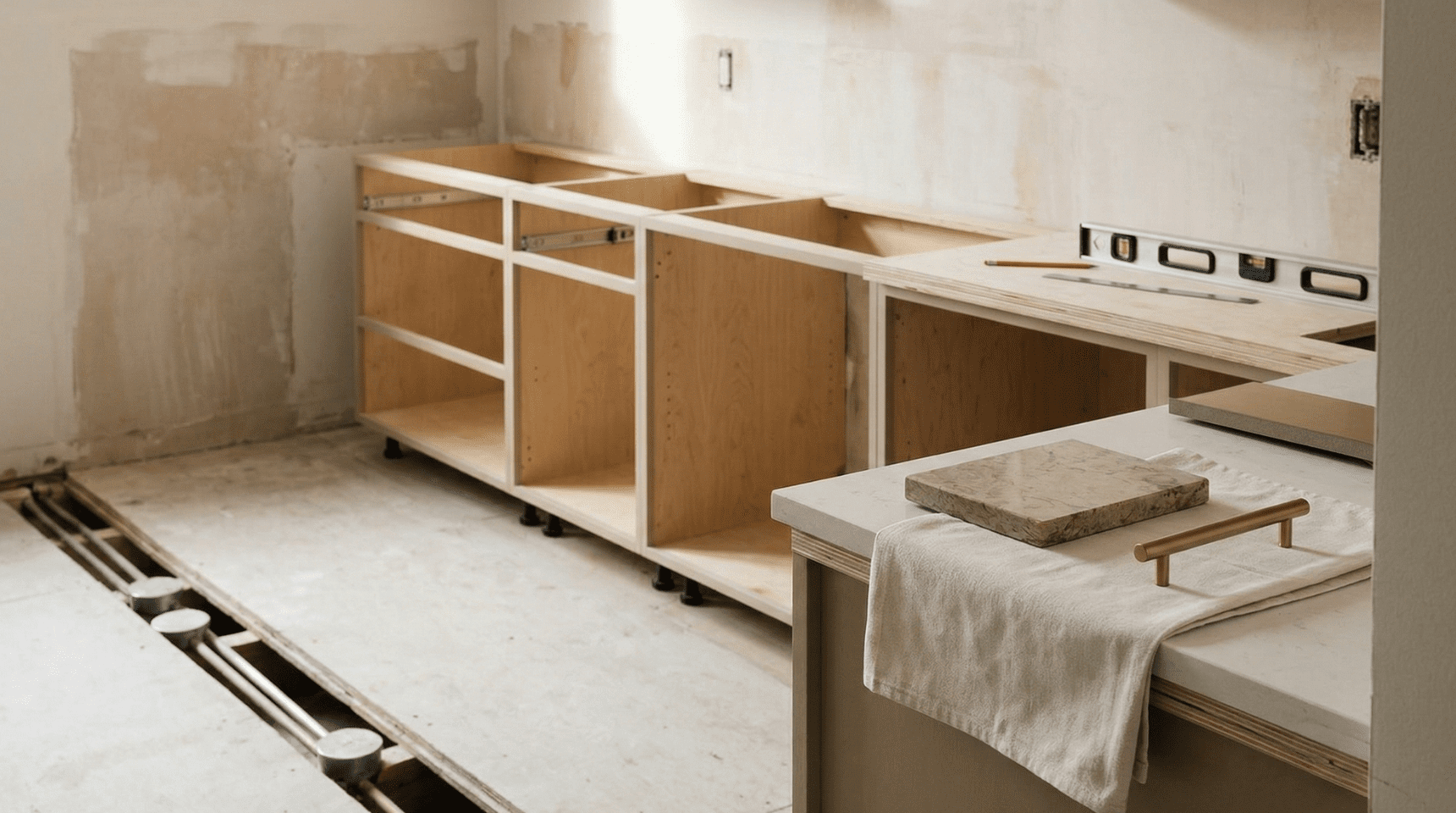
This is where things start looking like a kitchen again. The new cabinetry is delivered and installed. Base cabinets go in first, then wall cabinets, then tall units like pantries and appliance towers. The layout takes shape and you can start to see the design come together.
By the end of this week, the cabinets are in place but the benchtop is not yet installed (stone benchtops are templated after cabinets are fitted, then fabricated and installed separately).
Week 4: Benchtops, Splashback, and Finishing
The stone benchtop is templated, cut, and installed. The splashback goes up. Appliances are connected. Handles are fitted. The plumber returns for final connections (sink, dishwasher). The electrician reconnects rangehood, oven, and any under-cabinet lighting.
By the end of week four, the kitchen is functional. You can cook. You can wash dishes. The project may still have minor snagging items (touch-ups, adjustments, final clean), but the kitchen is yours again.
What Adds Time
Several factors can extend the timeline beyond four weeks. Knowing them in advance lets you plan around them.
Structural Work
If walls are being removed to open the kitchen to a living area, that adds time for engineering, demolition, steel beam installation, and plastering. This can add one to three weeks to the front end of the project before cabinetry work even begins.
Custom Stone Lead Times
Standard engineered quartz colours are usually available within one to two weeks of templating. Less common colours, Dekton, or natural stone may take longer. If you have your heart set on a specific slab, confirm the lead time before demolition starts.
Council Approvals
Most kitchen renovations in NSW do not require council approval because they are classified as exempt development (no structural changes to load-bearing walls). But if your renovation involves structural modifications, you may need a complying development certificate or a development application. This can add weeks or months to the front end of the project, though the actual build time is the same.
Weather and Supply Delays
Material supply chains occasionally cause delays. A backordered appliance or a delayed stone delivery can push the final connection date out by a few days. Good project management and early ordering minimise this risk.
How to Survive Without a Kitchen
Living without a kitchen for three to four weeks is uncomfortable, not impossible. Here is what works for most families we have worked with.
Set Up a Temporary Kitchen
Move the microwave, kettle, toaster, and a portable induction cooktop to another room (the dining table, laundry, or garage). Set up a washing-up station with a plastic tub if you do not have a laundry sink nearby. Stock up on disposable plates and cutlery if washing up is too difficult.
Meal Plan in Advance
Cook and freeze meals in the two weeks before demolition. Having ten or fifteen frozen dinners in the freezer takes the pressure off weeknights when the kitchen is out of action.
Budget for Takeaway
Be realistic. You will eat more takeaway than usual. Build a small buffer into your renovation budget for food costs during the build. It is better to plan for it than pretend it will not happen.
Talk to Your Renovation Team About Scheduling
A well-run renovation team will give you a clear schedule before work starts. You should know which days trades are on-site, when the messiest work happens, and when the kitchen will be reconnected. If your company cannot give you this level of detail, that is worth noting.
At Built to Desire, we coordinate all trades in-house so the schedule stays on track. You are not chasing separate plumbers and electricians yourself. One team, one timeline, one point of contact.
The “Surprise” Delays and How to Avoid Them
The renovations that run longest are usually the ones where something was discovered after demolition that nobody planned for. Common surprises include water damage behind cabinets, non-standard plumbing, outdated electrical wiring that needs upgrading, or asbestos in older homes.
A thorough pre-renovation assessment catches most of these before the first cabinet is removed. During a free in-home consultation, we assess the existing kitchen, check for visible issues, and discuss the scope of work so the quote and timeline reflect reality.
Timing Your Renovation Around Family Life
If you have flexibility on when to start, consider these factors.
School holidays can work well because the morning routine is less rigid. If your family can stay elsewhere for a week (with grandparents, for example), timing that week to coincide with the demolition and rough-in phases removes the worst of the disruption.
Avoid starting a renovation the week before a major event (Christmas, a birthday party, a family gathering) where you need a functioning kitchen.
Winter renovations in NSW are perfectly fine from a weather perspective. Trades can work year-round in the Macarthur region. We wrote a piece on renovating your home in winter that covers what to expect.
The Timeline Is Predictable When the Process Is Right
The length of a kitchen renovation is not random. It is determined by scope, materials, and how well the project is managed. A company that designs, manufactures, and installs the cabinetry (rather than subcontracting each stage to different businesses) can control the timeline more tightly because there are fewer handoffs.
If you want to know exactly how long your renovation will take before committing, get in touch with our team for a free consultation. We will give you a scope, a timeline, and a clear answer to the question that matters most: how long will I be without my kitchen?